|
|
 |
Why do greyhounds make good pets?
Greyhounds are quiet, well mannered, and very easy to live with. They are friendly,
affectionate, lazy, calm, clean, loving, trusting and good-natured.
Do retired racing greyhounds adjust quickly to life as a pet?
Yes. Greyhounds are fostered by GAP for around two months to expose them to as many new
things as possible, and the dogs are quite settled in a family environment well before the foster
time is through. Greyhounds thrive on human companionship and bond very quickly. Bonding usually
only takes a matter of days, and becoming accustomed to a new routine and environment generally
only takes a few weeks. The older greyhounds tend to be better mannered from the start while the
younger dogs are generally more curious and active.
Do retired greyhounds require a lot of exercise?
No. Greyhounds are sprinters and as such, tire very quickly. They enjoy, but are not
dependent on , moderate exercise. In most homes, the shared experience of a short brisk walk once a
day, or every second day, is enough to keep both the adopter and the adoptee in good physical
health. They can make good jogging companions, but only after they are properly conditioned for
long distances.
Do greyhounds have to be muzzled in public?
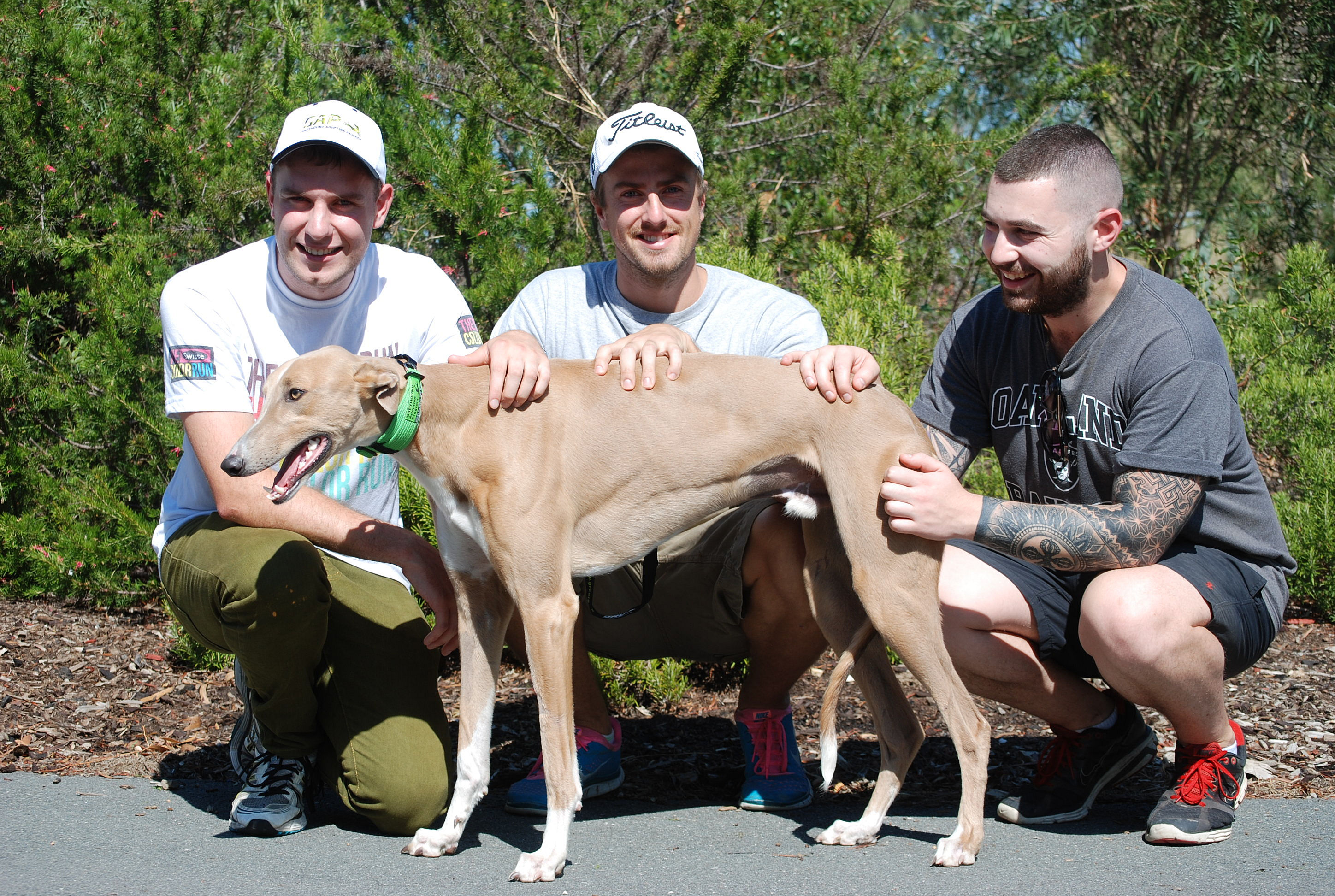
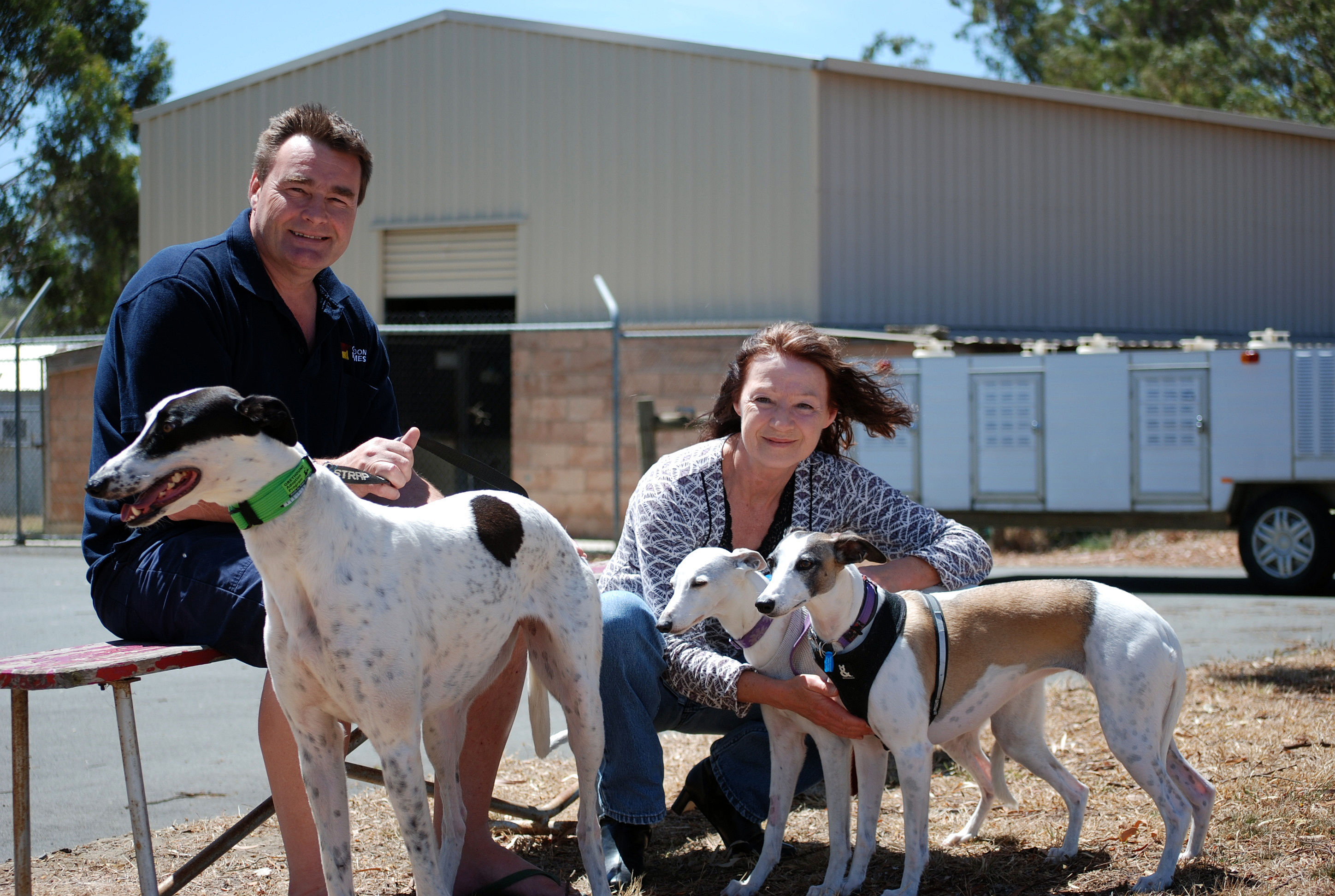
It is ONLY those greyhounds adopted as pets from GAP, and wearing the green GAP
identification collar, that are exempt from being muzzled in public. ALL other greyhounds,
whether they are current or retired racing greyhounds or greyhounds adopted as pets privately or
from a shelter or rescue group, MUST by law be muzzled in public.
Do greyhounds make good guard dogs?
No. Greyhounds are placid, friendly animals who are not protective about their property or
people. They tend not to bark, and rarely alert owners to the arrival of strangers at their home.
Can greyhounds be let off lead?
In public places, abolutely not. It is both illegal and extremely unsafe to allow your dog to
run off lead. This includes off leash dog parks. Greyhounds are one of the fastest land mammals,
with speeds reaching 67 kmp. Horses, by comparison, have been known to reach 70 kmp. If you think
that you will simply run and catch your greyhound if he bolts, consider this: a sprinting man can
run only 44 kph. Therefore, catching a running greyhound is only slightly less difficult than
catching a running horse - impossible. Greyhounds have been bred for thousands of years for one
thing: speed. In the case of retired racers, the situation is more acute because they have had the
speed and chase mentality reinforced in them from the moment they were born. Once a greyhound spots
something in the distance, they will be off to investigate and more times than not they won't come
back. Greyhounds also have no road sense and can easily run out on the road and get hit by a car.
Due to the speed at which they run, greyhounds can quickly get lost or seriously injured or killed
should they step in a pot hole, hit a stick or fence or slip on uneven ground.
There are safe, fully fenced areas in Victoria where it is legal to allow a greyhound off lead.
Please contact GAP for more information.
Are the greyhounds for adoption house-trained?
Most of our dogs are house-trained before being adopted. Greyhounds are intelligent, clean
animals who learn very quickly. As they are already kennel trained, house-training is usually
quickly learnt. You should, however, expect some accidents until a routine has been established.
What ages are available, and how long do greyhounds live for?
Our dogs are generally around two years of age, but it is standard for GAP to have a range
from eighteen months right up to eight years at any given time. The adapatable, stable and loving
nature of the greyhound predisposes an easy transition to companion dog regardless of age.
Generally, younger dogs will be more active, while the older dogs will be more quiet and
well-mannered. The expected lifespan of a greyhound is twelve to fifteen years.
What is the average size of a greyhound?
Male greyhounds are taller than females, weighing from 30 to 45kg and standing from 65 to
75cm at the shoulder. The females can weigh from 25 to 35kg and stand from 60 to 70cm at the
shoulder.
What colour are greyhounds?
The most common colours are black, brindle and fawn. Other colours include blue and white,
and a combination of these colours (e.g. black and white). It is important to note that GAP does
not select dogs by colour.
Do females make better pets than males?
No. There is little difference between males and females, except that the males are larger.
Female greyhounds tend to be more independent and stubborn, while males are generally more
affectionate and easy going.
Are greyhounds good with children?
Retired racing greyhounds are very tolerant with children. If a child becomes overbearing,
the dog will usually walk away rather than snap or growl. Male greyhounds can be better with
children than female greyhounds - females can sometimes regard children as puppies. It is in their
nature to discipline their own puppies when they get too boisterous, and some do the same with
human children. This is usually evidenced by growling or barking when their patience has been
pushed to the limit. Males, however, tend to see children as siblings, and are more likely to enjoy
playing with them. As with all breeds of dogs, small children should never be left unsupervised
with your greyhound.
Are greyhounds good with other dogs?
Greyhounds have been well socialized and are friendly by nature. They get along well with
other dogs, althouth they may not play with them. Common sense should be exercised during the
introductory period and supervised feeding is always recommended in a multi-pet household.
Are greyhounds good with other animals?
It depends on the dog. While some greyhounds are not suitable for homes with small animals
such as cats and rabbits, a lot are. At GAP we test our dogs very thoroughly to ensure that a
correct match between greyhound and adopter is achieved. Care should be taken when introducing your
new greyhound to your cat and they should never be left alone together until you are sure there are
no problems.
What happens if things don't work out?
All adoptions should be undertaken with the expectation that your new pet will be with you
for life. However, GAP will always reclaim greyhounds should your situation change or in the
unlikely event that you are unhappy with the dog.
What does it cost to adopt a greyhound?
GAP is a non-profit department of Greyhound Racing Victoria. An adoption fee of $200
(including GST) per dog is a donation which only partially defrays the following pre-adoption
services:
- Vaccination
- Sterilization
- Microchipping
- Heartworm testing
- Worming
- Teeth cleaning
- Nail trimming
- Health exam
- Grooming
- Temperament testing
- Telephone information
- Printed materials
- Post adoption support
- Basic obedience training
- Obedience lesson in your home
In addition to the above, your greyhound will also be supplied with a coat to keep him warm
and a special collar that identifies him as a GAP dog, allowing him to be walked in public without
a muzzle.
|